
Friday, September 11, 2009
Greenhouse Gas Verification Body


Friday, September 4, 2009
Rosenthal Water Rights Approved
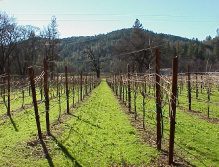 The California Water Resources Control Board issued an order on July 23, 2009 approving water rights permits for the Rosenthal Water Rights Project. AES prepared the California Environmental Quality Act documentation and the biological resources assessment for the project. The project includes the diversion to storage of 42.6 acre-feet and the direct diversion of 25 acre-feet of from Hoodoo Creek and other tributaries to Dry Creek upstream of Lake Berryessa in Lake County, CA. Water is stored in three existing reservoirs, which also store water pursuant to existing water rights, and water is used primarily for irrigation and frost protection purposes. The project also involves the development of a total of 47 acres of vineyard.
Cakebread Vineyards Water Right Approved
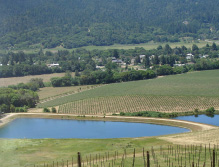 The California Water Resources Control Board issued an order on June 11, 2009 approving a water right permit for Cakebread Vineyards LLC. AES prepared the California Environmental Quality Act documentation and other supporting environmental studies for the project. The project includes the annual diversion to storage of 49 acre-feet of water from Anderson Creek, a tributary to the Navarro River in Mendocino County, CA. Water is used for irrigation, frost protection, and heat control of 47 acres of vineyard.
Guenoc Ranch Water Rights Approved
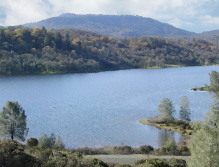 The California Water Resources Control Board issued an order on March 20, 2009 approving changes in the place of use for various water rights associated with the Guenoc Ranch in Lake and Napa counties, CA. AES prepared the Initial Study, Draft EIR, Final EIR and other supporting environmental studies for the project. The project includes the addition of 5,028 acres to the place of use covered under existing licenses and permits, and the development of up to 6,847 acres.
Wednesday, August 5, 2009
1,100-acres Taken Into Trust For United Auburn Indian Community
The Bureau of Indian Affairs accepted 1,100 acres of land into trust for the United Auburn Indian Community, in Placer County, CA, near the community of Sheridan. The Tribe plans to construct tribal housing and community facilities on the property, including 110 houses, an administrative center, community center, and school. The site, which is currently used for cattle grazing, contains sensitive environmental resources which will be avoided and/or enhanced through the implementation of a resources management plan. AES completed the NEPA Environmental Assessment and the Management Plan for the project, leading to approvals from the U.S. Fish and Wildlife Service and the subsequent trust acquisition of the property by the Bureau of Indian Affairs.
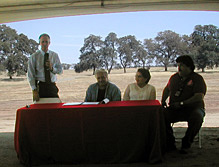
PHOTO: BIA Regional Director
Dale Morris and Tribal Council members
at land dedication ceremony
Wednesday, April 15, 2009
Mechoopda Casino Project Upheld in Federal Court
The Mechoopda Casino Project was challenged by Butte County in Federal court, however U.S. District Court Judge Henry H. Kennedy Jr. dismissed the county's suit yesterday. AES prepared the NEPA Environmental Assessment for the Tribe’s casino project.
---
CHICO ENTERPRISE-RECORD
Judge: County can't stop casino
By ROGER H. AYLWORTH - Staff Writer
Posted: 04/14/2009 12:00:00 AM PDT
OROVILLE -- After more than two years of legal briefs, arguments and counter-arguments, a federal court in Washington, D.C. has rejected a Butte County effort to block a Mechoopda casino on Highway 149, about a mile east of Highway 99.
Monday, representatives of the tribe and the county issued announcements that U.S. District Court Judge Henry H. Kennedy Jr. had dismissed the county's suit.
Butte County Counsel Bruce Alpert, in a press release, stated, "The proposed casino site on Highway 149 will have major public safety, traffic, environmental and groundwater impacts.
"For the past several years, the casino developer has simply refused to work with Butte County to find an alternative site. As a result, Butte County had no recourse other than this litigation."
Throughout the entire process, the county maintained the lawsuit was about environmental concerns related to the tribe's proposed casino site, and not an attack on the Mechoopda.
Even so, the suit, which was filed against the National Indian Gaming Commission and the Department of the Interior, sought to persuade the court the agencies could not grant the Chico Rancheria Mechoopda the right to use the land because the Mechoopda did not qualify as a tribe.
Based on a study conducted in 2006 by Professor Stephen Dow Beckham, of Lewis & Clark College in Portland, Ore., the county lawsuit charged the Chico Rancheria unit of the Mechoopda Indians was not a tribe in any meaningful sense, but was an amalgamation of 11 groups that had little or nothing to do with the historic Mechoopda tribe.
The county claimed if the Chico Rancheria group was not a legitimate tribe, the federal agencies could not grant them the necessary authority to put a casino on the Highway 149 property.
"The court has considered the briefing, scoured the record, and pressed the parties on this issue during oral argument. Having done so, the court cannot find the county has done enough to justify setting aside the agencies' actions here," wrote Judge Kennedy in his decision.
Doug Elmets of Sacramento, the tribe's spokesman, said the casino project is "alive and well."
"This project has been in the process for many years despite the hurdles that have been thrown in its way, particularly by Butte County," he said.
Elmets explained, from the tribe's perspective, the next step will be to get the agreements with the state that will allow for gaming on the 645-acre site.
He also said it is far too early to discuss a target for groundbreaking.
The press release from the county said the possibility of an appeal is still being discussed.
As of the end of 2008, the litigation had cost the county nearly $322,800, according to records obtained by the tribe.
Elmets charged that was money "that was flushed down the drain on a frivolous lawsuit."
Tuesday, March 24, 2009
The American Recovery and Reinvestment Act (ARRA) has been signed. Now what?
 The $787 billion Economic Stimulus package affects every state. Each state has a short timeline (120 days from appropriation of funds) to fulfill or “obligate” the first half of its funds and 1 year to obligate the remaining funds.
The opportunities for California include affordable housing, green schools, energy in local government operations, water supply reservoirs, green job training, transportation projects, and alternative fuels.
To be eligible for funding, projects must generally be “shovel ready”. With our experienced staff of environmental scientists, AES can assist in preparing your project for funding by preparing necessary permit applications and required CEQA/NEPA documents.
Subscribe to:
Posts (Atom)